HumCo PBA comes to Laytonville
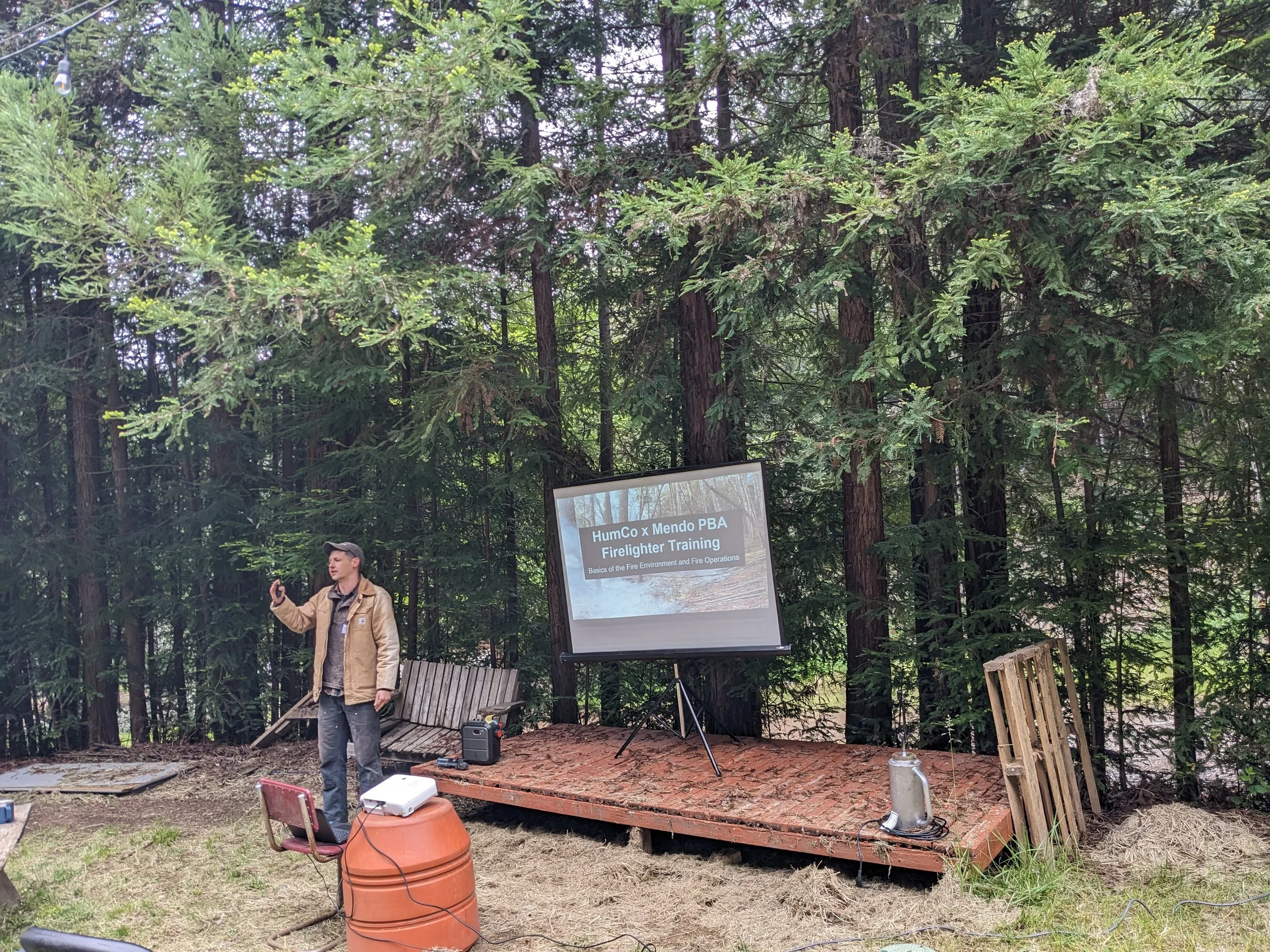
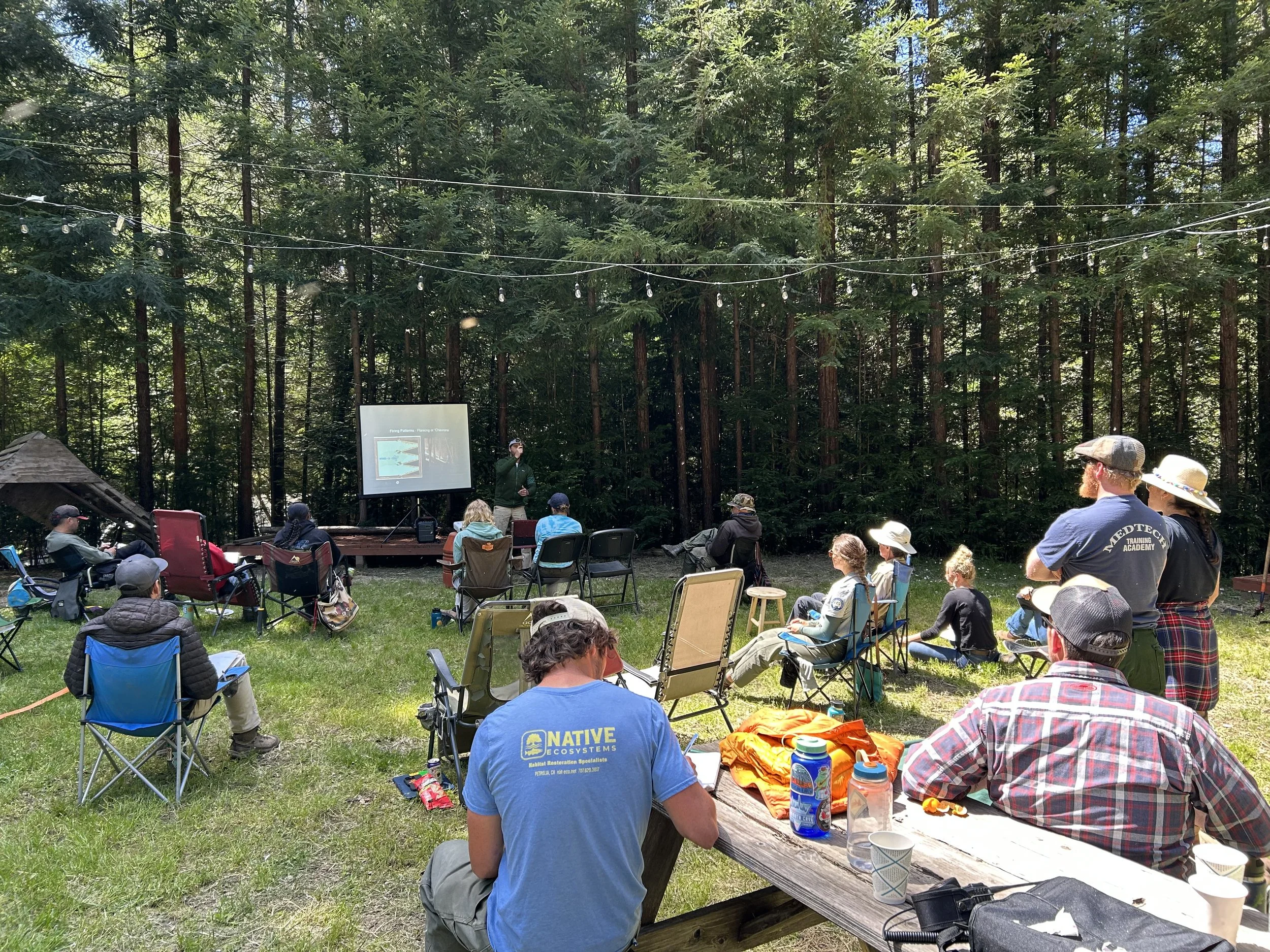
Members of the Mendocino and Humboldt County Prescribed Burn Associations (MCPBA and HCPBA, respectively) were welcome guests at Tan Oak Park in Laytonville, on a cool Saturday morning that climbed slowly into springtime temperatures.
About two dozen students from both counties were there for a Firelighter training, which HCPBA Co-coordinator Henri Holbrook described as “a way to make a distinction between (this and) what classically you could only be if you were engaging with fire – a firefighter. We’re changing that narrative to someone who uses good fire, as a firelighter. That doesn’t mean we don’t put fires out. Sometimes we do have to put them out. But we’re just changing the tone: we’re not here to fight the fire, we’re here to set the fire.
“This Firelighter training is part of that PBA ethic of neighbor-helping-neighbor, and mutual support from the community. It’s a way to train up community members who don’t want to be professional firefighters on how to feel safe and effective, engaging with prescribed burning.”
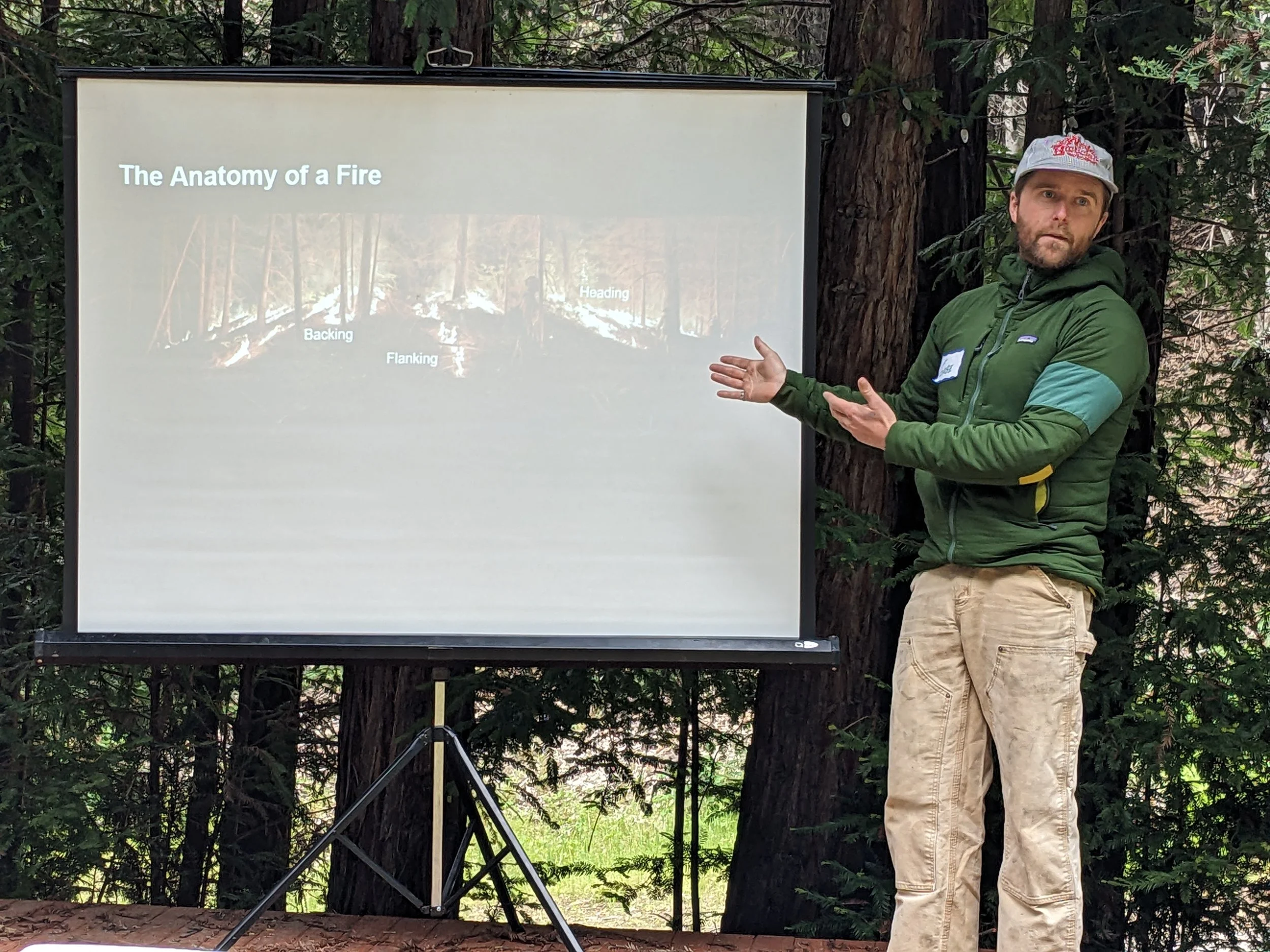
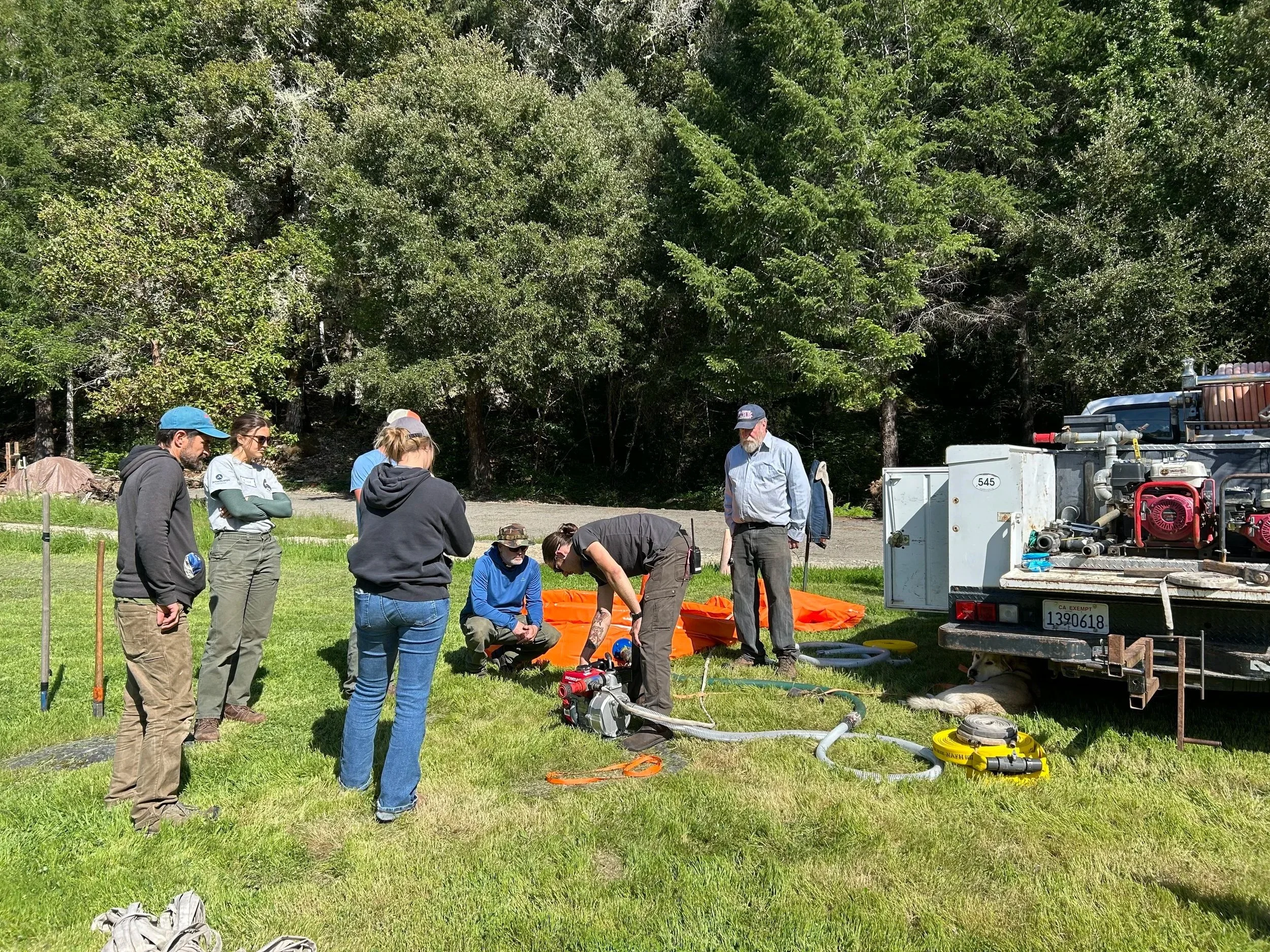
Holbrook developed the Firelighter curriculum in 2023 as an informal initiation for people who want to help out on a burn but are not necessarily on their way to becoming fully certified “burn bosses.” The training he and his colleagues provided on April 25 included basic fire science about weather, topography, and botany, plus some adventure stories, followed by a few rounds of hands-on training at field stations. Trainers from both counties’ PBAs answered detailed questions and introduced students to the fast-paced, mentally and physically demanding work of using fire to clear fuels and invasive plants from the landscape.
Humboldt’s PBA was the first of its kind on the West Coast. It was founded in 2017, which was a devastating year for fires in Northern California. Just the previous year, Lenya Quinn Davidson and Jeffrey Stackhouse, both advisors with the University of California Cooperative Extension (UCCE) in Humboldt County, had traveled to Nebraska to see how landowners there were using beneficial fire. Since then, Holbrook said with a laugh, the HCPBA has “kind of become a little bit of a beast,” with an email list of about 450, and about 150 of them participate in trainings, burns, and events every year.
Holbrook and Gabriel Goff, the two coordinators of HCPBA, work for UCCE. They are the only two paid members of the mostly volunteer organization. “The ethic is that we pool resources, expertise, and labor to get burns and trainings done on private lands, in order to bring the responsibility of managing lands with fire back to private folks, community folks,” he emphasized. Every year is different because of weather conditions, but he estimated that in 2025 the HCPBA worked on about 30 prescribed fires. “Part of that was supporting other people’s burns,” he specified. “We showed up and helped them get the resources to make it happen. Then we had maybe about 15 of our own fires, start to finish. We don’t burn for anybody; we help you burn for yourself.”
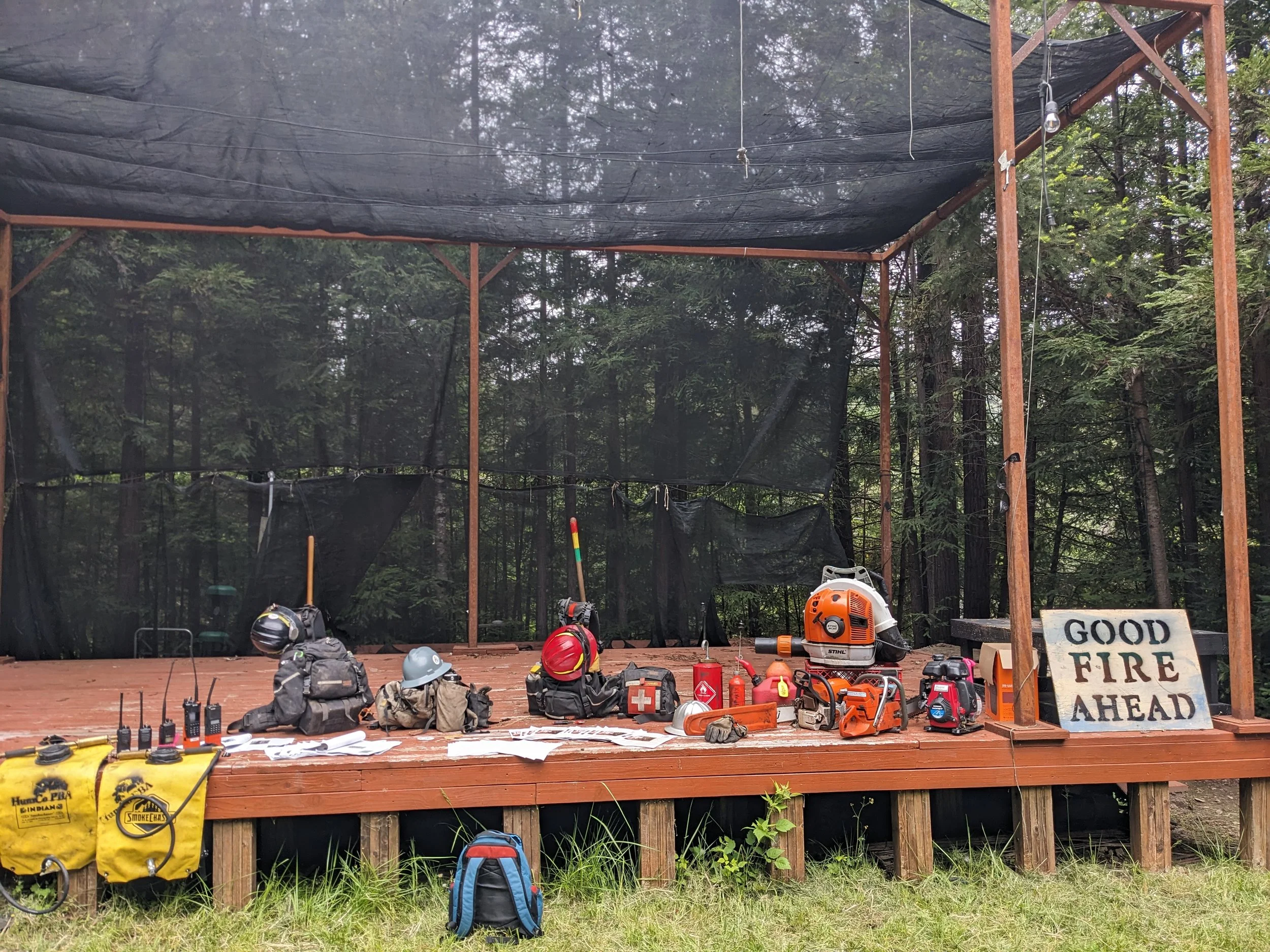
Prescribed burns are preceded by weeks and sometimes months of planning. Often, the forests have been neglected for so long that they require hand-thinning before it’s safe to put fire on the ground. Weather experts exchange lengthy analyses of hyper-local conditions – the water content of the trees, the most recent rain, the length of time since the last fire, and the diameter of the twigs are all factors in the calculations. Escape routes are carefully planned, and overhead hazards scouted.
But when the time comes, prescribed burns are fast-paced science, requiring instinct and tolerance of sensory overload. “It’s so visceral, and there’s so much going on,” HCPBA Co-coordinator Gabriel Goff acknowledged. “Things are burning. It’s hot, it’s smoky, it’s windy, it’s crazy, there's radio traffic going on, someone’s running a chainsaw. But if you really distill all that down, you are a person standing in a place that’s got all these elements going on, from the plants to the water to the geology of the hillside that you’re on. Fire gives you a unique perspective to cut through the noise and realize, I’m aware of what’s happening to so many different things at one time. You really get to plug into an interesting human geography when you’re on a fire because you have to re-center and be like, ‘Oh, I can be aware of all those things all the time. And they all fit together.’”
Emily Lord, Beneficial Fire and Education Coordinator for the Mendocino County Fire Safe Council and Coordinator for the Mendocino County PBA, expressed gratitude for her colleagues’ time and expertise. “There is a huge wealth and lineage of knowledge” in the HCPBA, she said. “It’s a relatively small community of people involved in prescribed fire, and there is a huge culture of knowledge exchange and reciprocity in community fire. So, hopefully, by fostering this connection between our two PBAs, we can make sure everyone is on the same page and ready to burn on the fireline and train up more people from both counties to be ready to help each other out on burns.”
In addition to Lord, who taught the after-lunch weather session, MCPBA leadership included founding member and Chair Mike Jones, who is also the UCCE Forest Advisor for Mendocino, Lake, and Sonoma Counties, and steering committee member and UCCE Beneficial Burning and Tribal Land Stewardship Advisor Ally Sung-Jereczek. They will be able to expand the training available in Mendocino County by importing content shared by the Humboldt PBA.
Weather in Mendocino County is complicated, since the topography is nothing like the flat fields of Nebraska. The weather report for Laytonville doesn’t distinguish between the ridges of Bell Springs Road and the damp crannies of Tan Oak Park.
“Local knowledge is always best,” said Will Emerson, Bell Springs Fire Department Chief and an early member of the HCPBA. “Long-time residents gain an understanding of the microclimates in their area and can tell you that every day in the summer at 1:00, the wind is going to come out of the west and blow hard.That might not show on the weather report, and might not be understood by the statewide fire agencies. Lots of times on big fires, they bring in incident command teams from elsewhere, and they don’t know the local weather and topography. So it really helps to have local knowledge, which changes from half a mile or less.”
Though Emerson’s local knowledge is specific to northern Mendocino County, he traveled further north in the early days of the HCPBA to help out on some of their initial burns. “It was really wonderful,” he recalled. “Our novice firefighters got live fire training. Prescribed fire is excellent training for beginning firefighters. It helped them out, and it helped us out.” Emerson’s interest in beneficial fire meshes well with his role as president of the Northern Mendocino Ecosystem Recovery Alliance (NMERA), a community organization that was founded to restore watersheds and the economy, by putting people to work at jobs that help the natural world flourish. He was pleased with the Firelighter class at Tan Oak Park, where he’d like to see a training center for similar classes in sustainable stewardship.
Ellis Brandt, who offered a presentation on how to stay aware of hazards on prescribed burns, is one of the many experienced volunteers the HCPBA relies on to help run burns and trainings. He described how it’s important to show up on a burn in the right frame of mind: well-rested, well-fed, and fully hydrated. “You can’t help keep the forest healthy and safe if you’re not keeping yourself healthy and safe,” Brandt reflected. “Looking out for yourself and being in touch with your body and saying, like, ‘Hey, I need to take five.’ The great thing about this community burning world is, no one’s going to look at you or think you’re weak for that. They’re going to be like, ‘Yeah, Dude, take five and do what you need to do,’ which I think makes for a great, inclusive atmosphere that we have here.”
Brandt added that he believes fire is for everyone, from the youngest to the oldest members of a community. “I think that’s what fire has been for most of human history, and I think getting back to that is what we need to do – get more fire on the ground… You don’t need to be the prime physical specimen to interact with fire. It really is for everybody, and there’s a time and a place and a burn for everybody.”
Holbrook had some parting words: “Get involved with your local Prescribed Burn Association,” he advised. “Fire is fun.”
For more information about you can involved with the Mendocino County Prescribed Burn Association, visit: