

Sudden Oak Death lingers on: how to spot it, how not to spread it
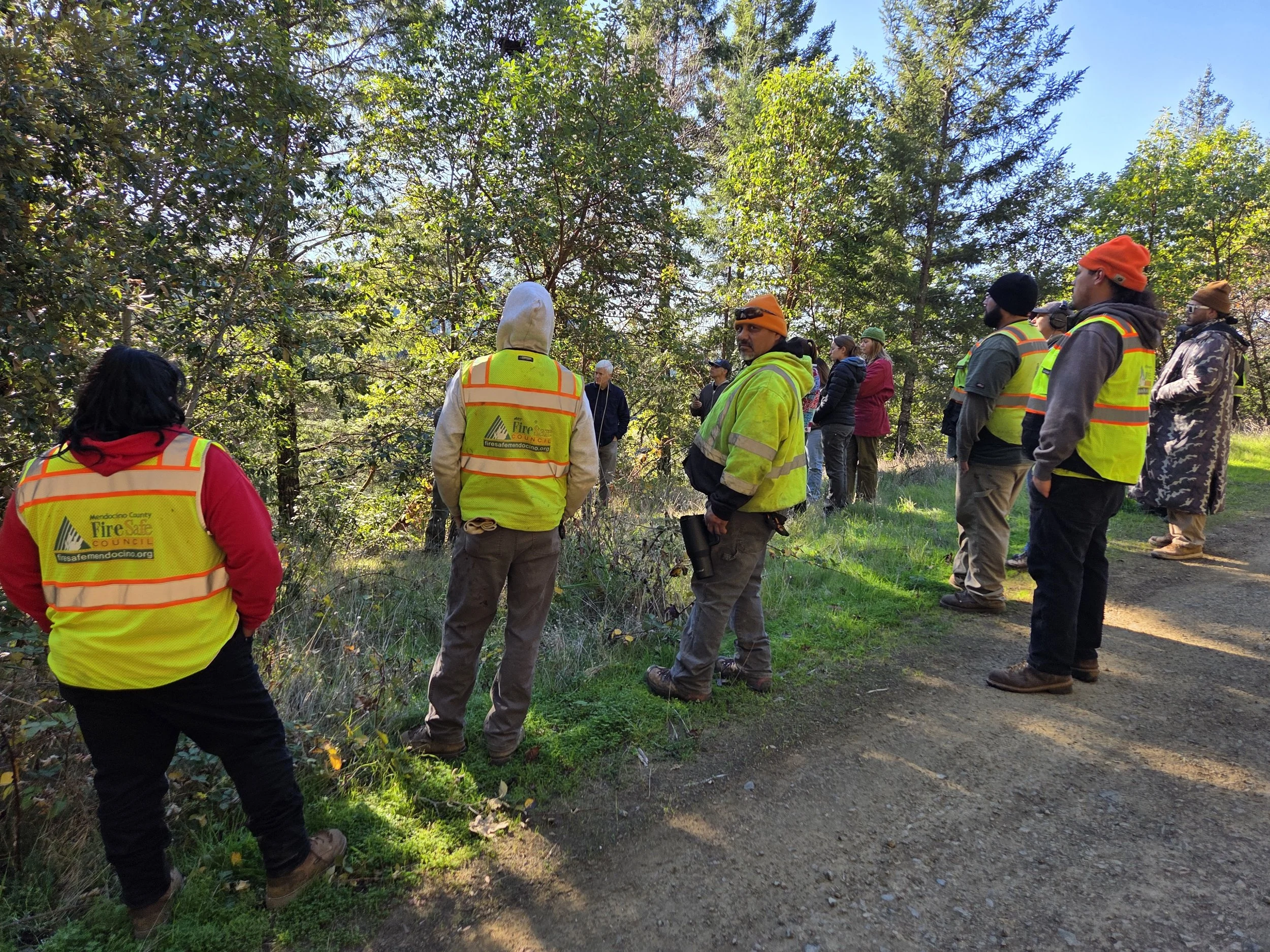
One component of the Mendocino County Fire Safe Council’s Strategic Plan is to improve its environmental stewardship. As part of fulfilling that mission, on a bright, crisp winter morning outside of Willits, it organized a training by scientists from the UC Cooperative Extension and CALFIRE on Sudden Oak Death (SOD). The training was for its own crew, but was also open to other fuel reduction contractors and environmental stewards. The Mendocino County Fire Safe Council fuels management crew and crew members from Hybrid Indigenous Stewardship took advantage of the opportunity to ask questions, review best management practices, and learn to identify some infected specimens.
Sudden Oak Death is caused by an invasive oomycete called Phytophthora ramorum, a fungus-like water mold that attacks a variety of plants, not just oak trees. The pathogen has been present in Mendocino County since 2008, from Yorkville to MacKerricher State Park. UC Forest Advisor Mike Jones reported that, “Doing driving surveys, I’ve found highly suspect trees in every watershed in the west side of the county, all west of 101.” The eastern end, he added, is dryer and not as inviting to the organism, which needs moisture to travel and thrive. Still, added Chris Lee, a forester and forest pest specialist with CALFIRE, “it’s coming down slowly from southern Humboldt County. It’s coming from that MacKerricher Fort Bragg area toward Jackson Demonstration State Forest, so coming toward here and it’s slowly starting to spread in that southern Mendocino area.” It’s also mutating into varieties that can withstand dry conditions better than the original version. There is no cure and no vaccine. Dead standing trees provide fuel for wildfires, and the loss of acorn-bearing trees has a devastating effect on the ecosystem.
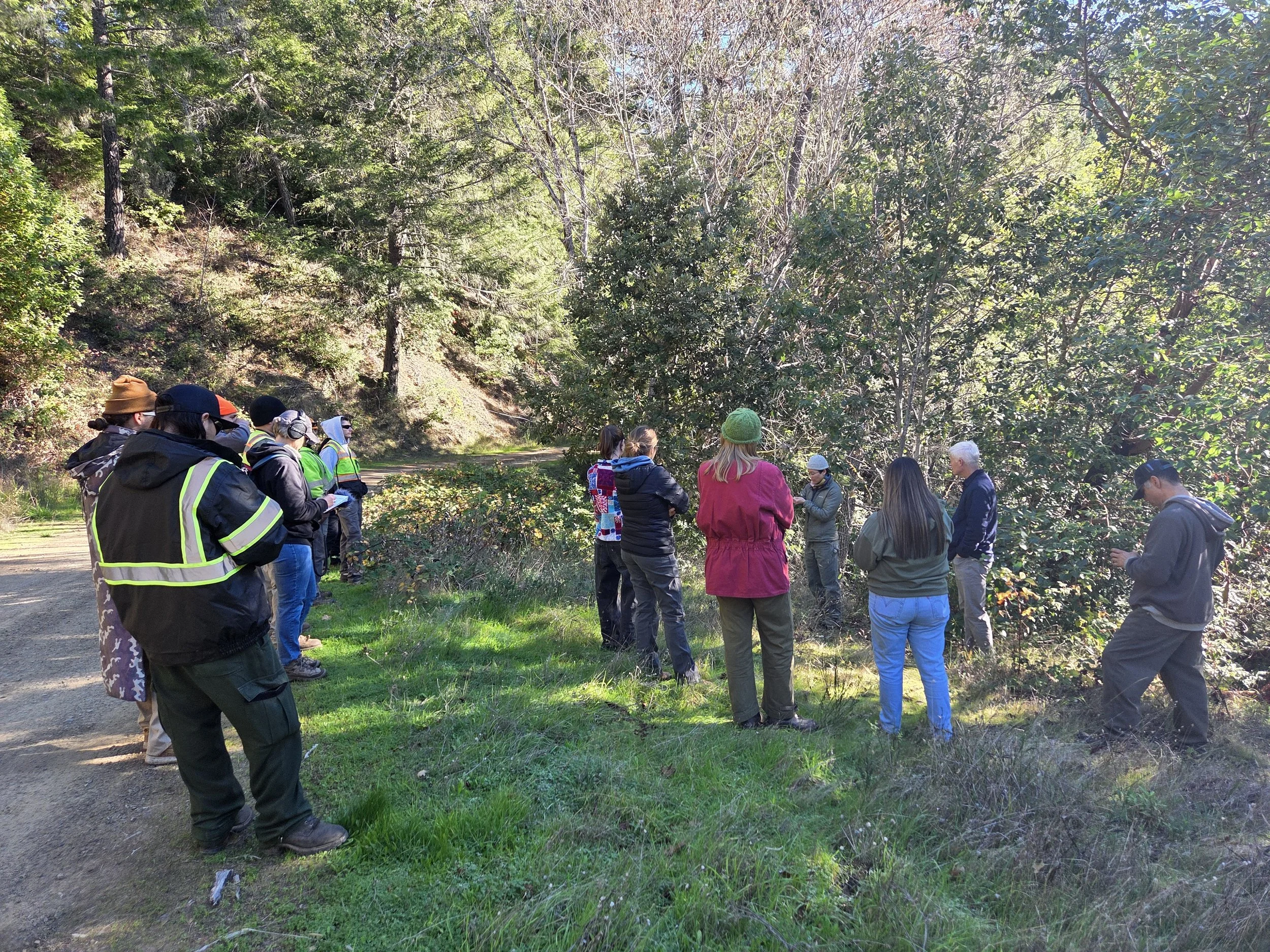
After delivering this information, Jones led the group to the edge of a draw and invited them to peer through the shadows at a tanoak that died of SOD. Before plunging over the edge for a closer look, he pointed out a few smaller tanoaks, their leaves stiff and brown from the blight. These trees were surrounded by California bay laurels, a native plant that carries the disease but typically does not succumb to it. If an ailing oak tree is surrounded by bay laurels, the chances that it’s suffering from SOD are pretty high. SOD is not an opportunistic infection, meaning it attacks healthy trees as well as those that are already doing poorly for other reasons.
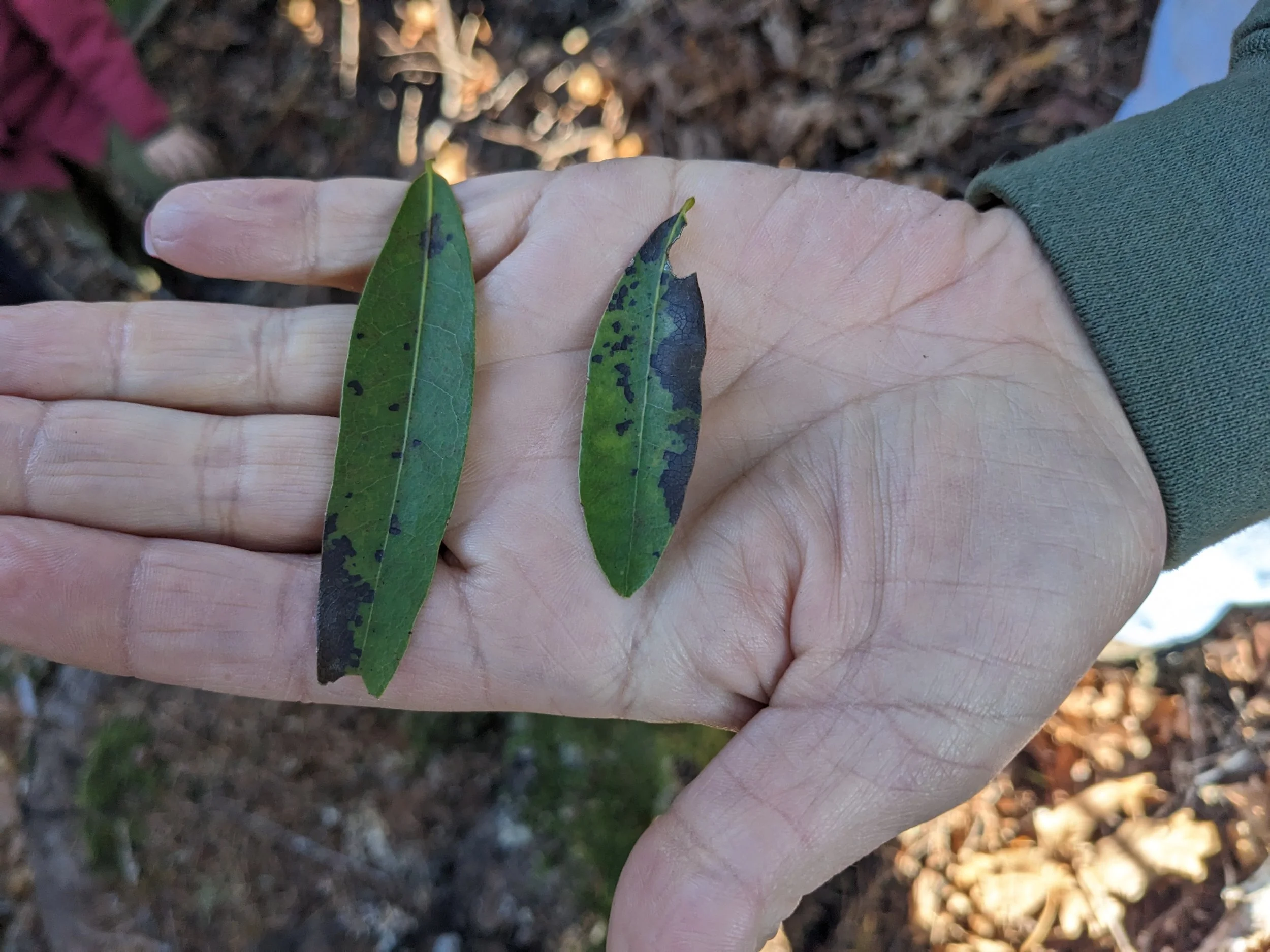
The illness manifests in a variety of ways, and can be difficult to identify, even for experts. Wallis Robinson, a UC researcher working in Humboldt and Del Norte counties, noted that “It’s important to understand that the symptoms are different on different plants, and that this pathogen has different effects on different plants. Depending on what those symptoms are, they're much easier to miss. And depending what that effect is it’ll have more or less of a landscape-level effect. On bay laurels, Sudden Oak gets in, makes little tiny leaf spots on the leaves, and that’s the extent of the infection on the plant. The bay laurels are able to shed those leaves, go, I didn’t need that anyway, and live their life, and they’re fine.” Tanoaks, black oaks, and live oaks, on the other hand, are susceptible because the pathogen gets into their vascular system, in addition to being on the leaves.
The disease is an inveterate hitchhiker. For this reason, Jones urged crews that work around the county to take measures to prevent spreading it. Leaves and twigs are most likely to spread SOD, but it and other pathogens that also persist in the soil can get stuck in tire treads and boots, and establish themselves in a new site.
A few rules of thumb can minimize risk. If a crew is working at multiple locations throughout the day, it’s best to save the site that’s known to be infected for last. Parking on asphalt or rock instead of wet soil is another piece of advice that can simplify a cleaning routine at the end of the day. Brushing off boots with a scrub brush and then spraying with a disinfectant is a good habit to adopt. And using an air compressor to blow the dirt, leaves, and twigs out of the tires before leaving the site is a good way to discourage pathogens from finding a new home in another stand of trees.
In spite of its slow creep, its ambiguity, and its capacity to become even more devastating, Lee is not consumed with despair over Sudden Oak Death.
“In California, oaks and tanoaks are a keystone species in terms of ecological function,” Lee reflected. “When we start to lose those trees, it has a cascading effect on animals, on invertebrate species, on herbaceous and shrub species, on hydrology and all sorts of other things. I think that most land managers recognize that, and they are working to monitor this pathogen and control it wherever they can. I think people are being responsible about it.”
